
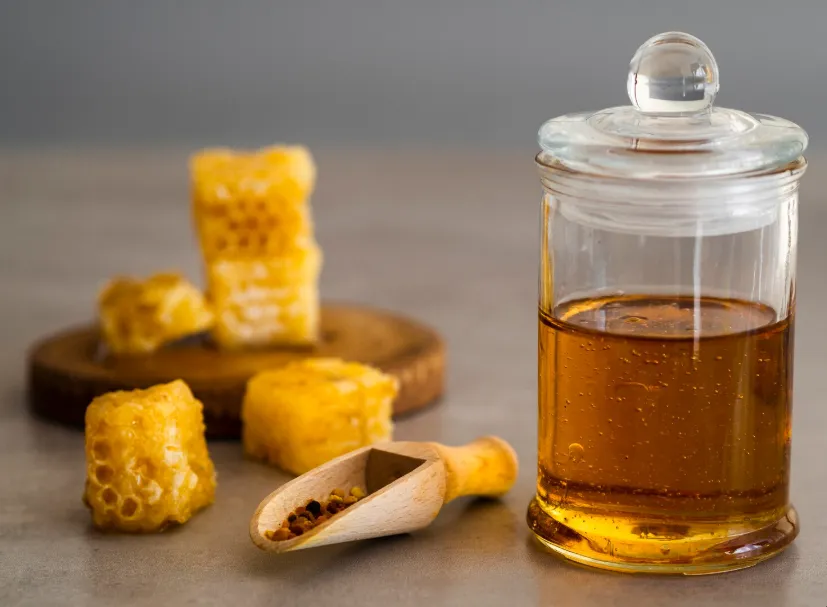

Most honey on a grocery store shelf comes from clover, wildflower, or blended sources. It is mild, predictable, and interchangeable between brands. Tupelo honey is none of those things. It comes from one specific tree, in one narrow region, during one short window each spring. Raw tupelo honey has a chemistry, flavor, and shelf behavior that no other honey variety can replicate, which is why it commands a premium price and a following that treats it more like a fine wine than a pantry staple.
A Honey That Can Only Come From One Place
Tupelo honey is produced from the nectar of the white Ogeechee Tupelo tree, which grows in the river swamps and floodplains of Northwest Florida’s Apalachicola basin and parts of coastal Georgia. The trees do not grow commercially anywhere else in the world.
The Harvest Window
The bloom lasts roughly 2 to 3 weeks each spring, typically in late April to mid-May. Beekeepers position hives along the riverbanks just before the bloom begins and must time the harvest precisely to capture pure Tupelo nectar before other wildflowers start competing for the bees’ attention. A cold snap, heavy rain, or early bloom end can wipe out the entire season’s yield.
Why This Creates Rarity
The combination of a single growing region, a short bloom, and weather-dependent yields means the annual supply of genuine Tupelo honey is extremely small compared to honeys sourced from crops that bloom for months across entire continents. This scarcity is real, and it is the primary reason Tupelo honey costs three to five times more than standard varieties.
Chemistry Unlike Any Other Honey
What happens inside the jar is where Tupelo truly separates from everything else on the shelf.
High Fructose, Low Glucose
Most honeys contain roughly equal amounts of fructose and glucose. Tupelo honey flips that ratio dramatically, with fructose levels reaching 44 to 48% and glucose dropping below 30%. This unusual chemistry produces two practical effects:
- Stays liquid for years: While most raw honeys crystallize within weeks or months, Tupelo resists crystallization almost indefinitely. No grainy texture, no need to warm the jar, no separation.
- Lower glycemic index: The higher fructose-to-glucose ratio gives Tupelo a lower glycemic response than most honeys, making it a comparatively gentler option for people monitoring blood sugar. It is still a sugar and should be consumed in moderation.
What This Means on Your Shelf
A jar of raw tupelo honey purchased today will pour the same. way two years from now. Other raw honeys sitting next to it will have crystallized long before. This natural stability without any processing or heating is unique to Tupelo and is one of the easiest ways to verify authenticity.
A Flavor Profile You Will Not Find Anywhere Else
Tupelo honey does not taste like “honey” in the generic sense. The flavor is distinct enough that experienced tasters can identify it blind.
Appearance
The color is a light golden amber with a subtle greenish tint that is immediately noticeable when compared to the deeper ambers and dark golds of wildflower or buckwheat honeys.
Taste
The flavor characteristics that set Tupelo apart:
- Buttery and smooth with a soft, rounded sweetness that does not spike or linger harshly
- Floral and delicate with hints of vanilla, light cinnamon, and subtle citrus
- Clean finish that fades gently rather than leaving the heavy aftertaste common in darker honeys
- Occasionally described as having cotton candy or bubblegum notes, especially in younger harvests
This profile makes Tupelo a finishing honey. It is best used where its delicate character can be tasted directly rather than cooked into recipes where the subtlety would be lost.
Raw, Single Source, and Unblended
The word “raw” on a Tupelo label means the honey was not heated above natural hive temperatures and was minimally filtered, preserving the enzymes, antioxidants, pollen, and aromatic compounds that processing destroys.
Authentic Tupelo is also a single source. During the bloom, beekeepers work to ensure their hives forage primarily on Tupelo blossoms rather than mixing with nearby wildflower nectar. Pollen analysis and fructose-to-glucose ratios are used to verify that the honey meets Tupelo purity standards. Products certified as “Tupelo True” have passed independent laboratory testing confirming the nectar source.
Health Benefits Beyond the Taste
Like other raw honeys, Tupelo delivers functional benefits alongside its sweetness:
- Antioxidants from flavonoids and phenolic compounds that support cellular health
- Antibacterial properties from natural hydrogen peroxide production and low moisture content
- Throat soothing qualities that make it a traditional remedy for coughs and irritation
- Trace vitamins and minerals, including B vitamins, iron, and manganese, are preserved in the raw state
The lower glycemic index adds a practical health advantage that most other honeys cannot claim, which has made Tupelo increasingly popular among health-conscious consumers looking for a natural sweetener with fewer blood sugar spikes.
Why It Costs More
The price premium is driven by factors that cannot be engineered away.
Production Realities
- Geographic limitation to a single river basin in Northwest Florida and coastal Georgia
- A 2 to 3 week bloom that produces the entire year’s supply
- Weather vulnerability, where one bad spring eliminates the harvest entirely
- Labor-intensive placement of hives in swampy, remote terrain that requires boat access
- Strict purity management to prevent contamination from competing wildflower nectar
Spotting the Real Thing
Not everything labeled “Tupelo” on a shelf is pure. Watch for these authenticity signals:
- Single region origin, stating Florida or Georgia, ideally with a specific harvest location
- Harvest year printed on the label
- “Raw” and “unfiltered” confirm no heat processing
- Tupelo True certification or similar independent lab verification
- Reputable producer with a traceable supply chain rather than a generic label
Blends marketed as “Tupelo style” or honeys with vague origin claims are often regular honey priced at a Tupelo premium. Buy from producers whose reputation depends on the authenticity of every jar.
Best Ways to Use and Store It
Tupelo’s delicate flavor shines brightest when it is not heated or cooked.
Ideal Uses
Drizzle it over yogurt, fresh fruit, cheese boards, or toast. Stir it into warm (not boiling) tea. Use it as a finishing sweetener on oatmeal or pancakes, where the buttery, floral character can be tasted directly.
Storage
Keep it at room temperature in a sealed jar away from direct sunlight. Thanks to its chemistry, Tupelo stays liquid and pourable indefinitely without refrigeration or warming.
Conclusion
Raw tupelo honey is different from every other honey on the shelf because of where it comes from, how its chemistry behaves, and what it tastes like. The combination of a single origin river basin, a 2 to 3 week bloom, an unusually high fructose ratio, and a flavor profile that stands alone in the honey world makes it genuinely rare rather than marketing rare.
Brands like Smiley Honey have been bottling Tupelo honey in Wewahitchka, Florida, since 1989, right in the heart of the Apalachicola River basin, where the Tupelo trees bloom every spring. Every jar is Tupelo True certified, OK Kosher certified, and carries the Fresh From Florida label. The honey goes from hive to bottle with no heating, blending, or shortcuts. For anyone who has never tasted real Tupelo, the first jar from Smiley Honey is the one that sets the standard.